Short-Form Video Strategy for Independent Musicians
Master short-form video on TikTok, Reels, and YouTube Shorts. Learn how to isolate song hooks, test video formats, and convert scrollers into Spotify listeners.
By PlaylistProfit Editorial Team · Updated 2026-11-19
Short-form video has become the primary mechanism of organic music discovery on the internet. Platforms such as TikTok, Instagram Reels, and YouTube Shorts process billions of views daily, giving independent artists a direct line to audiences that traditional radio and press cannot match. However, generating views does not automatically translate into career growth. A million views on a video can easily result in fewer than fifty streams if the connection between the audio and the artist is broken.
Converting casual viewers into dedicated listeners requires an intentional strategy. You must know which segment of your song commands attention, how to present it visually across differing platform cultures, and how to direct passive scrollers toward streaming platforms. This guide provides a systematic approach to building a sustainable short-form video pipeline that actively feeds your catalog on Spotify.
Isolating the High-Impact Section of Your Track
The standard structure of recorded music does not mirror the behavior of short-form feeds. In a digital feed, you have less than two seconds to convince an individual not to swipe. If your audio relies on a fifteen-second ambient intro before reaching an engaging melody, the majority of users will abandon the video before hearing a single chord.
Identifying the Emotional and Sonic Peak
When choosing the sound bite for your video, do not default automatically to the primary chorus. While the chorus often holds the central melodic theme, other sections of a song frequently possess higher viral potential:
- The Lyric Punchline: A single, highly relatable, or polarizing line from a verse that creates an immediate emotional reaction.
- The Pre-Chorus Build: The moment of rising dynamic tension right before an instrumental drop, which creates natural suspense.
- The Instrumental Hook: A distinctive guitar riff, synth lead, or drum fill that serves as an instant sonic signature.
- The Outro or Bridge: Often where vocalists deliver their most technically demanding or emotionally uninhibited performance.
If you are uncertain which segment holds the strongest commercial traction, you can run your mix through a free song analyzer to evaluate structural dynamics and energy shifts before slicing your promotional clips.
Testing Multiple Audio Snippets
Never rely on a single snippet of a song. For any given single, cut at least three distinct fifteen-to-thirty-second audio stems:
- Option A: The primary chorus (the broad, high-energy hook).
- Option B: The narrative verse (the lyric-heavy concept).
- Option C: The bridge or drop (the dynamic sonic payoff).
Distribute these as original sounds across separate pieces of content. Watch the analytics closely. Frequently, the section the songwriter assumed was secondary is the exact section that resonates with an audience.
Platform Nuances: TikTok vs. Reels vs. YouTube Shorts
While all three platforms share vertical video formats, their user expectations, algorithmic behaviors, and conversion paths differ fundamentally. Repurposing the same creative file is acceptable, but your delivery and sound management should acknowledge platform mechanics.
TikTok: Sound-First Culture and Cultural Context
TikTok is built entirely around audio infrastructure. When a user enjoys an audio clip on TikTok, their natural behavior is to tap the spinning record icon in the bottom right corner to see other videos using the same sound. On TikTok, raw and informal content typically outperforms high-gloss commercial aesthetics. Audiences prize vulnerability, process, behind-the-scenes reality, and clear storytelling. If a video feels like an advertisement, users swipe immediately.
Instagram Reels: Aesthetic Cohesion and Existing Community
Instagram is fundamentally visual and social. While discovery through Reels is substantial, viewers on Instagram also assess your broader profile grid. A viewer who discovers you through Reels is more likely to visit your profile to evaluate your visual identity, your personality, and your aesthetic credibility. The production value on Reels can be higher than on TikTok, and your core fanbase will interact with these posts directly in their main feeds.
YouTube Shorts: The Search and Catalog Engine
YouTube Shorts feeds directly into the largest long-form video library in the world. When a viewer discovers you on Shorts, the YouTube algorithm begins serving your channel’s long-form content, lyric videos, and live performances to that user’s homepage. Shorts users are less focused on audio trends and more engaged by self-contained narratives, performance virtuosity, and technical insight.
Five High-Performing Video Formats for Musicians
Staring at a phone camera with no conceptual plan leads to creative paralysis. Having a rotating set of reliable video archetypes ensures you always have a structure to work within.
1. The In-Studio Process Breakdown
Viewers are fascinated by how songs are constructed from scratch. Deconstruct your track layer by layer:
- Show the bare drum beat, then unmute the bass line, followed by the chord progression, and finally the vocal hook.
- Highlight the "weirdest" sound in your production, such as a vocal chop manipulated through heavy effects or a domestic noise used as a percussion sample.
- Demonstrate how a lyric was written, discussing the real-life situation that prompted the line.
2. Direct-to-Camera Lyric Performance
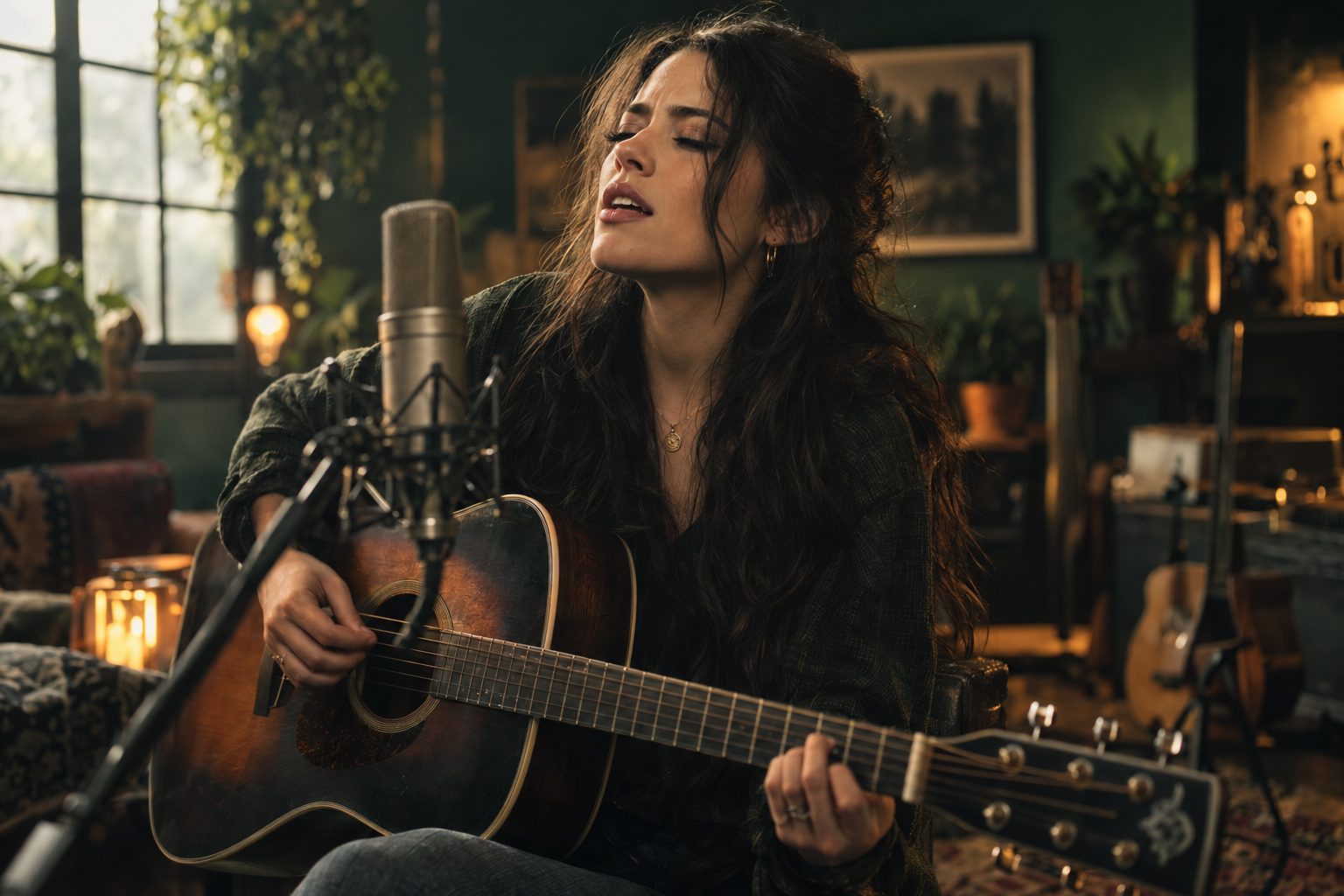
Strip away all production and perform the track live with an acoustic guitar, a keyboard, or over a stripped-back instrumental backing track. Position the camera at eye level, maintain direct eye contact with the lens, and sing with authentic intensity. Provide clear on-screen text of the lyrics so viewers can read along. This format proves your musical legitimacy and creates personal intimacy.
3. The Narrative B-Roll Clip
This format pairs cinematic, moody, or lifestyle footage with your audio snippet. The video does not require you to sing on camera. Instead, it relies on relatable on-screen text that sets an emotional scene, such as: "POV: Driving home at 2 AM realizing you are finally over them." The viewer projects their own life experience onto your music. Visuals can range from scenic car rides to looping visuals; you can even adapt assets created through a Spotify Canvas maker into atmospheric short-form loops.
4. The Contextual Story Hook
Start the video speaking directly to the camera for five seconds before the music plays. State an intriguing narrative hook, for example: "I spent three months trying to describe what it feels like to leave your hometown, and this song is what happened." Then, cut immediately to the music playing over the final master. By giving the listener context, you provide them with a reason to care about the lyrical payoff.
5. The Challenge or Polarizing Prompt
Ask a question or introduce a healthy creative challenge. For example: "Can you write a pop song using only three chords and a synthesizer from the 1980s?" or "Rating my favorite basslines I have ever recorded." This invites viewers to comment, debate, and engage, which sends positive retention signals to the distribution algorithm.
The Conversion Funnel: Turning Scrollers into Spotify Listeners
Views, likes, and comments are secondary metrics if your objective is sustainable streaming growth. Converting a passive viewer on a social platform into an active listener on Spotify requires reducing friction at every touchpoint.
Optimize the Sound Metadata
When you upload video content to TikTok or Instagram Reels, ensure the sound is properly linked. If your distributor (e.g., DistroKid, TuneCore, CD Baby) has delivered your track to social libraries, search for your official audio track in the platform’s library and attach it to your video at low or zero volume while keeping your original recording audible. This ensures the official sound page collects your videos and links directly to streaming profiles.
Simplify Your Profile Links
Do not direct users to a complex website with multiple menus. Your bio link must be clean, mobile-optimized, and immediate. When a user clicks your link, the option to listen to the specific song featured in your latest videos should be at the very top. Many artists use a simple landing page to aggregate links to Spotify, Apple Music, and YouTube Music without confusing the user.
Use Visual Call-to-Actions (CTAs)
Direct calls-to-action in the caption are frequently ignored. Instead, reinforce where the track lives inside the video itself. Place a subtle, clean graphic at the end of the video or pinned in the comment section stating: "Song: 'Track Title' on Spotify." Avoid aggressive language like "Go stream my track right now"; instead, frame it as an answer to a question: "For everyone asking, this is called 'Track Title'—out on all platforms."
Synchronize with Spotify Canvas
When a viewer finally leaves TikTok to listen to your song on Spotify, the experience must feel cohesive. According to Spotify for Artists, tracks with a high-quality Canvas see higher rates of track shares and playlist adds. Use visual assets that reflect the style or theme of your viral short-form clips so the user immediately knows they have arrived at the right destination.
Step-by-Step Workflow: From Studio to Batch Creation
Producing short-form content daily while writing, recording, and maintaining a personal life causes rapid exhaustion. The solution is moving from spontaneous posting to a structured batching system.
Step 1: Audio Stem Preparation
Once your final mix or demo is ready, export three distinct 15-to-30-second sections. Master them cleanly so they hit adequate loudness without clipping when compressed by social media algorithms.
Step 2: Scripting and Hook Writing
Dedicate one hour to writing ten different visual and text concepts based on those three audio clips. Plan out your on-screen text overlays, your filming location, and the emotional tone for each video.
Step 3: Dedicated Filming Blocks
Set aside a two-hour block once a week specifically for video production. Set up your lighting, phone tripod, and audio playback. Record all ten video concepts back-to-back. Change shirts or locations within your space between takes to give each video a distinct visual identity.
Step 4: Native Editing and Captions
Edit your videos using clean video editing software or the platforms' native editors. Ensure captions are active; a substantial percentage of social media consumption occurs with the device muted. Ensure your on-screen text does not overlap with platform UI elements (such as like buttons, captions, and sound titles on the right and bottom of the screen).
Step 5: Scheduled Deployment
Schedule or manually post your content over the course of the week. Post at times when you can actively monitor the comment section for the first thirty minutes. Replying to comments promptly signals to the platform that the post is fostering community interaction.
Posting Consistency, Metrics, and Mental Stamina
A common misconception is that an artist must post four times a day to gain traction. While volume can accelerate algorithmic testing, unsustainable output inevitably leads to low-quality content and creative burnout.
The Realistic Consistency Standard
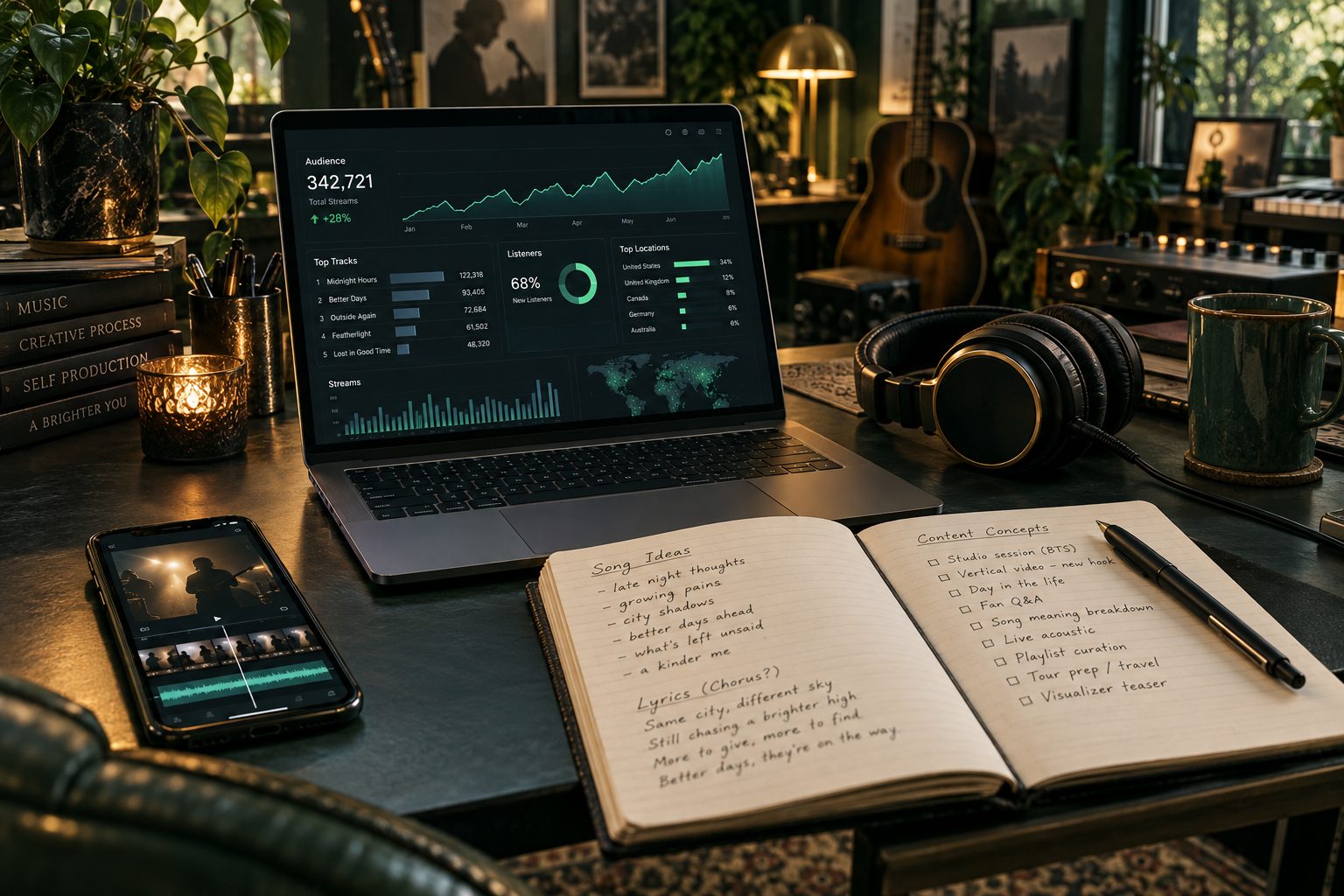
For most independent musicians, posting one high-quality, well-conceived video per day (or four to five per week) across TikTok, Reels, and Shorts is optimal. This frequency provides the algorithm with enough data points to locate your audience without diluting the quality of your musical presentation.
Metrics That Actually Matter
Do not evaluate the success of a video based entirely on raw view counts. Focus your attention on these three core indicators:
- Watch Time and Completion Rate: If users watch your video to the end, the platform will continue expanding its distribution. Strive for content where the audio loops smoothly.
- Audio Saves: When a user saves your sound on TikTok or Instagram, they are bookmarking your song to use it later or listen again. This is a direct measure of musical intent.
- Profile Visits: High profile visits mean your video provoked sufficient curiosity for the viewer to seek out your identity and click your bio link.
Common Mistakes Musicians Make with Short-Form Video
Avoiding critical errors is just as vital as executing good strategy. Many artists work hard on content creation but fail because of basic tactical missteps.
1. Acting Like a Marketer Instead of an Artist
Videos that open with "Hey guys, my new single drops on Friday, please pre-save it" perform poorly. Audiences do not care about release logistics; they care about how the music makes them feel. Show the value, the emotion, or the sonic hook before asking for any action.
2. Neglecting Lighting and Audio Intelligibility
While content does not need to look like an expensive music video, viewers swipe away from murky lighting and distorted speaking audio. If you are talking to the camera, use a cheap lavalier microphone or speak directly into your phone’s microphone in a quiet room with soft furnishings.
3. Giving Up on an Audio Clip Too Early
Algorithms test content in randomized cohorts. A specific sound snippet might receive five hundred views on Monday, but a slightly different visual presentation of that same audio on Thursday might reach fifty thousand people. Do not abandon a song because your first three videos underperformed.
4. Forgetting the Safe Zones
Every platform places interface buttons over the video canvas: user names and captions at the bottom, engagement icons on the right margin, and search bars at the top. Ensure all crucial on-screen text, your face, and visual focal points sit comfortably inside the center "safe zone" so interface elements do not obscure them.
Integrating Video Momentum with Broad Promotion
Short-form video is a powerful catalyst, but it functions best as one component of a balanced release strategy. When an audio clip starts gaining organic traction on TikTok or Instagram, that momentum sends ripples through the ecosystem. Viewers begin typing your name into Spotify search bars, triggering algorithmic mechanisms like Release Radar and Discover Weekly.
To capitalize on that initial surge, ensure your digital presence is completely aligned. Maintain an up-to-date artist profile, verify your metadata, and consider pairing your organic content pushes with structured outreach like PlaylistProfit's playlist promotion plans. Combining organic short-form discovery with deliberate playlist placement ensures that when an interested scroller lands on Spotify, they encounter an active, growing ecosystem rather than a dead-end profile.
Conclusion
Short-form video is not a tax on your musical talent; it is a direct channel to an audience that wants to hear your work. By isolating your most compelling hooks, respecting the nuances of TikTok, Reels, and Shorts, and providing frictionless pathways to your streaming profiles, you turn social media feeds into a predictable engine for long-term music discovery. Approach your video content with the same compositional care, emotional honesty, and structural discipline that you bring to your songwriting, and the streams will follow.
More music promotion guides · Free Song Analyzer · Playlist campaigns