How to Pitch Spotify Playlist Curators: Complete Guide
Learn how to find and pitch independent Spotify playlist curators respectfully, detect bot scams, avoid payola, and build lasting industry relationships.
By PlaylistProfit Editorial Team · Updated 2026-11-19
Getting your music placed on user-generated playlists is one of the most reliable ways to build momentum on streaming platforms. While Spotify editorial placements remain the goal for many independent artists, independent curators drive a massive portion of daily listening. These tastemakers manage focused, genre-specific communities that feed critical engagement data back into algorithmic engines like Discover Weekly and Release Radar.
However, pitching curators is widely misunderstood. Many artists waste hours sending mass emails to inactive accounts, paying suspicious promotion companies that use bot networks, or violating platform guidelines through paid placement schemes. Success requires a methodical approach: identifying genuine curators, verifying their audience integrity, crafting personalized communication, and adhering to strict ethical standards. This guide covers the complete process of finding, vetting, and pitching independent playlist curators respectfully and effectively.
Understanding the Independent Playlist Ecosystem
Before sending a single message, you must understand how third-party playlists fit into the broader streaming landscape. Spotify features three distinct categories of playlists, each operating under different rules and selection criteria:
- Editorial Playlists: Curated by Spotify's internal music editorial team (for example, New Music Friday or Pollen). These can only be pitched directly through your Spotify for Artists dashboard prior to release.
- Algorithmic Playlists: Generated automatically for each listener based on listening habits, skip rates, and engagement (such as Discover Weekly, Release Radar, and Daily Mixes).
- User-Generated / Independent Playlists: Created and maintained by individual listeners, artists, indie labels, music bloggers, and third-party media outlets.
Independent playlists serve as the testing ground for your music. When a listener saves your track from an independent playlist, adds it to their personal library, or listens all the way through without skipping, Spotify's recommendation engine registers those positive signals. Accumulating steady, legitimate streams across dozens of focused independent playlists is often what triggers algorithmic pickup later in a song's lifecycle.
How to Find Legitimate Independent Curators
Finding legitimate curators requires patience and systematic research. Rather than searching for broad terms like "chill music" or "indie rock," you should focus on niche subgenres, micro-scenes, and direct peers within your sonic space.
1. Use the "Discovered On" Feature
One of the most effective methods to uncover active playlists is studying other independent artists who share your sonic style and audience size. Look up artists who make music similar to yours, navigate to the "About" tab on their Spotify desktop profile, and examine the "Discovered On" section. This section displays the top public playlists driving listeners to that specific artist. Take note of any user-generated playlists listed there, as those curators have already demonstrated an affinity for your style of music.
2. Targeted Keyword Searches
When searching inside Spotify, combine your genre with functional, cultural, or geographical qualifiers. For instance, instead of searching "hip hop," search for specific sub-genres, localized movements, or activity-based themes. Look for playlists that are updated on a weekly or bi-weekly basis. Playlists that have not added new songs in several months are usually abandoned and are not worth your outreach time.
3. Cross-Platform Research
Curators rarely operate exclusively on Spotify. Many share their curation work on Instagram, TikTok, YouTube, Reddit, or personal music blogs. Inspect curator bios on Spotify: many curators who welcome submissions state their submission preferences explicitly in the playlist description, including a business email address, a submission portal, or their social handle. If a curator does not list contact information anywhere on their profile or description, respect their privacy and move on to the next contact.

Vetting Playlists and Spotting Dangerous Red Flags
Not every playlist with thousands of followers is beneficial for your career. In fact, landing on the wrong playlist can permanently damage your data profile or result in penalties from the platform. Spotify actively monitors for artificial streaming, and according to Spotify for Artists guidelines, tracks involved in artificial streaming manipulation can be penalized or removed entirely.
Red Flag 1: Pay-for-Placement (Payola)
If a curator replies to your pitch with a price list, guarantees a specific placement in exchange for money, or asks for a fee to add your song, you must decline immediately. Spotify's User Guidelines strictly prohibit accepting financial compensation or any other reward in exchange for playlist inclusion. Legitimate curators select music based purely on artistic merit and fit for their listeners.
Note the difference between pitching platforms and payola: paying a legitimate third-party submission platform an administrative review fee or using PR services to submit your music for consideration is common, but paying directly for guaranteed placement on a specific playlist violates platform terms.
Red Flag 2: Artificial Growth and Bot Networks
Bot networks create artificial streams by running automated scripts across server farms. Being placed on a bot playlist introduces erratic data to your catalog. You can spot suspected bot playlists by observing several telltale patterns:
- Suspicious Follower Spikes: Playlists that gain thousands of followers overnight without any viral catalyst or press coverage are frequently using follower-purchasing services.
- Unusual Listener Locations: If an indie artist who sings in English finds their top listening cities suddenly concentrated in small, unexpected municipalities with high server density, it often points to bot farm activity.
- Mismatch Between Follower Count and Engagement: A playlist with 80,000 followers where songs receive almost no streams or saves indicates fake followers.
- Identical Tracklists Across Multiple Accounts: Scammers often clone identical tracklists across dozens of generic profile names to give the illusion of an expansive curation network.
Before pitching, you can also evaluate your own track's structural and sonic readiness using our free song analyzer to ensure your track metrics align with high-performing releases in your space.
Crafting a Respectful, Professional Pitch
Curators often manage their playlists as a passion project alongside full-time jobs. They frequently review dozens, sometimes hundreds, of tracks every week. A respectful, concise pitch demonstrates that you value their time and understand their specific curation style.
Essential Elements of an Effective Pitch
Your outreach email or message should be short, structured, and easy to read on a mobile device. Always include:
- Personal Greeting: Address the curator by their name or the name of their platform. Avoid generic openings like "Dear Sir/Madam" or "Hey Playlist Owner."
- Playlist Reference: Mention the exact name of the playlist and cite a specific song or artist currently on the list that you admire. This proves you have actually listened to their curation.
- Clear Context: Give a one- or two-sentence summary of your project, highlighting your genre, location, and the emotional mood of the song.
- Direct Streaming Link: Provide an easily clickable link to your song on Spotify. Do not attach large audio files (like MP3s or WAVs) to emails, as these often trigger spam filters and clutter inboxes.
- Electronic Press Kit (EPK): Include a single link to your press materials. You can quickly assemble a streamlined one-page press kit using an EPK builder so curators can review your artwork, bio, and visual assets without leaving their browser.
Pitch Email Template
Here is an example of a concise, respectful pitch that respects the recipient's workflow:
Subject: Music Submission for [Playlist Name] - [Artist Name], "[Song Title]"
Hi [Curator Name],
I hope your week is going well. I've been following your [Playlist Name] playlist for a while, particularly loved your addition of [Specific Track/Artist] recently—it fits that atmospheric, late-night vibe really well.
I am an independent [genre] artist based in [City]. I recently released a track titled "[Song Title]" that carries a similar mood and production style: [Insert Spotify Track Link].
If you feel it suits what you are building with [Playlist Name], I would be honored to be considered for an addition. No worries at all if it isn't the right fit this time.
Thanks for your time and for supporting independent music,
[Your Name / Artist Name]
[Link to EPK / Social Media]
Step-by-Step Pitching Workflow
Consistency and organization are what separate successful campaigns from wasted effort. Follow this step-by-step workflow for every release cycle.
Step 1: Build a Qualified Spreadsheet
Create a dedicated document to track your contacts. Include columns for Playlist Name, Curator Name, Contact Method (Email, Instagram, Platform Link), Date Contacted, Response Status, and Notes on recent additions. Aim for a qualified list of 30 to 50 active, verified playlists that match your specific subgenre rather than 300 random contacts.
Step 2: Verify Playlist Activity
Before reaching out, confirm that the playlist has been updated within the past 14 to 30 days. Check whether the curator rotates songs or simply lets lists stagnate. If the playlist has not been updated in three months, archive the contact and focus on active curators.
Step 3: Follow the Curator's Specified Submission Rules
Always respect the channel requested by the curator. If their Spotify bio states "Send submissions via email to example@domain.com," do not send a direct message on their personal Instagram profile. If they provide a submission form or link, use that exact method. Overstepping boundaries creates an immediate negative impression.
Step 4: Send the Pitch
Send your personalized pitch during standard business hours in the curator's local time zone. Avoid blasting multiple curators simultaneously through the "BCC" field. Every message should be sent individually to ensure personalization.
Step 5: Follow Up Politely (Once Only)
Curators are busy and emails get buried. If you have not heard back after 10 to 14 days, you may send one single, polite follow-up replying to your original email thread. If they do not respond to the follow-up, accept the silence and move forward. Never send multiple follow-ups, and never demand an explanation for why a track was not included.
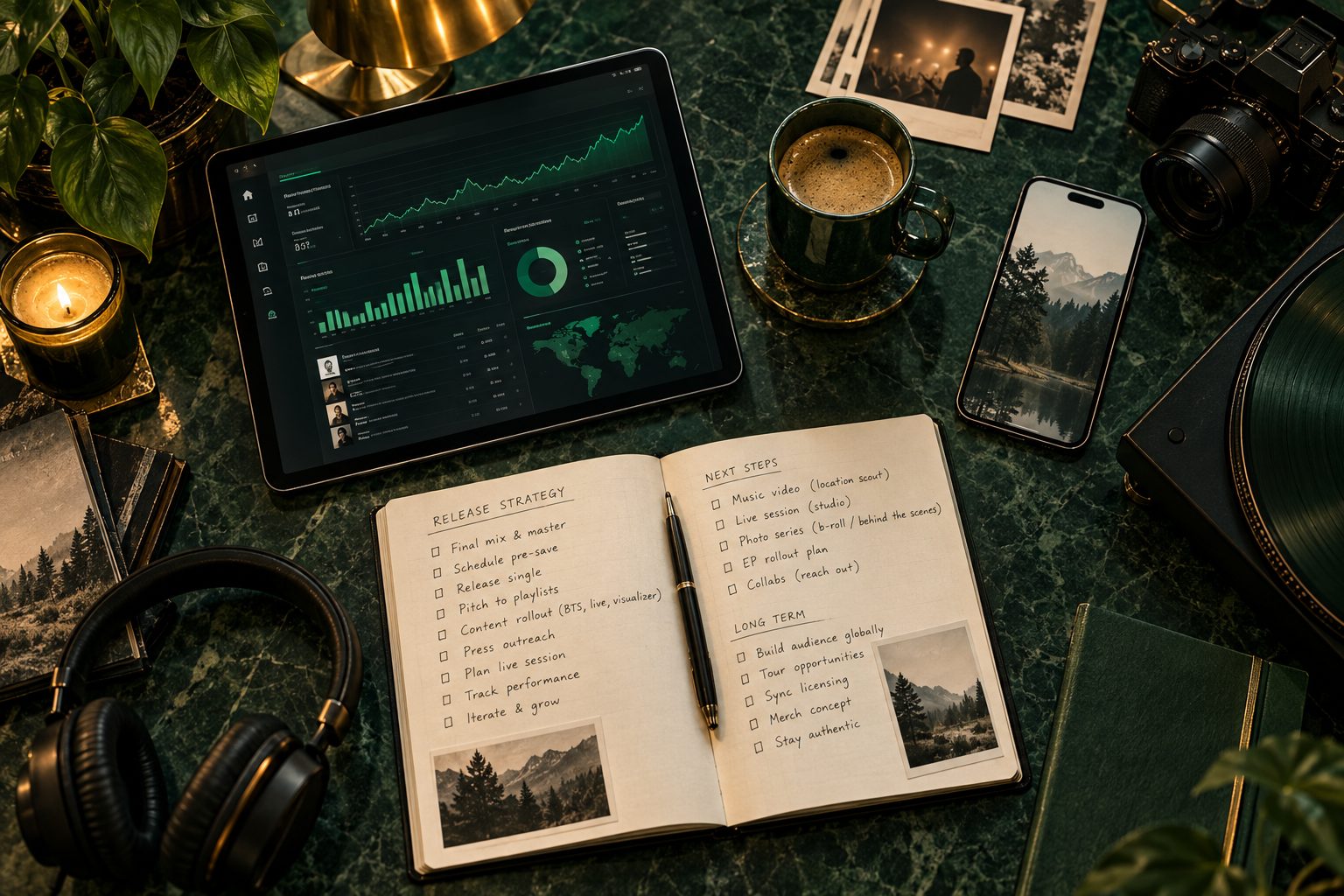
How Curated Services Work with Vetted Human Curators
Many independent artists lack the time required to manually research, vet, and contact dozens of individual curators for every release. This has led to the rise of specialized promotion platforms that streamline the pitching process.
However, it is crucial to understand the difference between dangerous "pay-for-stream" scams and legitimate curator networks. Curated services like PlaylistProfit operate by maintaining relationships with vetted, human curators across diverse genres. Here is how that model functions ethically:
- Vetting for Bot-Free Audiences: Reputable services continually audit curators in their network, monitoring growth curves, stream ratios, and listener geographies to filter out bot farms and artificial manipulation.
- Genre-Specific Matching: Rather than blasting your song to unrelated lists, submissions are routed specifically to curators who curate your subgenre.
- Human Listening and Editorial Discretion: Vetted curators listen to your music and retain full editorial control over whether a song is accepted. Placements are never guaranteed through payola; the service covers the infrastructure and outreach required to place your music directly in front of active tastemakers.
If you prefer to focus your energy on creating music while running an organized, professional campaign, exploring structured playlist promotion plans can save significant time while protecting your catalog from dangerous bot networks.
Common Mistakes Artists Make When Pitching
Avoiding standard industry missteps can immediately put your submission ahead of the competition. Curators frequently report the following errors:
Sending Mass BCC Pitches
Blasting an email to 100 curators with all recipients hidden in the BCC field signals laziness. Curators can immediately spot generic copy, and these emails are often flagged automatically as spam by mail servers. Take the three extra minutes per email to personalize your message.
Pitching the Wrong Genre
Sending a high-energy trap record to an acoustic folk playlist proves that you did not listen to the playlist. This wastes both your time and the curator's time, and it makes the curator unlikely to consider future submissions from you.
Using High-Pressure or Entitled Language
Phrases like "This is guaranteed to blow up your playlist," "You need to add this today," or "Why haven't you responded yet?" reflect unprofessionalism. Curators are under no obligation to feature your music. Maintain an appreciative, humble, and professional tone at all times.
Sending Audio Attachments
Never attach MP3 or WAV files directly to pitch emails. Large file attachments fill up inboxes and frequently cause email service providers to flag your address. Always provide streaming links—preferably directly to Spotify, SoundCloud private links (for unreleased tracks), or your online press kit.
Nurturing Long-Term Curator Relationships
Music promotion is not a one-time transaction; it is a long-term networking effort. When an independent curator does choose to add your song, your work is only half done. How you respond to a placement establishes whether that curator will want to support your next release.
Acknowledge and Share Placements
When you are added to a playlist, thank the curator promptly. Share the playlist on your social channels—such as Instagram Stories, X, or Facebook—and tag the curator or the playlist handle. By directing your existing fans to their playlist, you provide reciprocal value and help their curation brand grow.
Support Their Platform Organically
Save the playlist to your personal Spotify library and stream it occasionally. If the curator runs a blog, YouTube channel, or newsletter, subscribe to it and engage with their content. Building authentic familiarity ensures that when your name appears in their inbox three months later for your next single, they recognize you as a supportive community member rather than a stranger asking for a favor.
Conclusion
Pitching independent Spotify playlist curators remains one of the most effective ways for independent artists to gain traction, gather positive streaming data, and trigger algorithmic discovery. Success does not come from spamming hundreds of random accounts or purchasing quick streams from shady vendors. It comes from careful research, rigorous vetting against bot networks and payola schemes, concise and respectful communication, and long-term relationship building. By treating curators as creative partners and respecting their curation criteria, you position your music for sustainable, organic growth across the platform.
More music promotion guides · Free Song Analyzer · Playlist campaigns