How to Get Featured on Music Blogs: A Pitching Guide
Learn how to pitch music blogs effectively. Discover research tactics, email pitch structures, essential press assets, and ways to avoid paid review traps.
By PlaylistProfit Editorial Team · Updated 2026-11-19
Securing press coverage on reputable music blogs comes down to three factors: pitching the right writer, offering an easy-to-stream unreleased or newly released record, and presenting professional press assets with zero friction. Editors and freelance music journalists receive hundreds of cold submissions every week. Most of those emails are ignored not because the music is uninspired, but because the pitch is unfocused, sent to the wrong person, or missing critical information.
This guide walks you through the entire process of landing organic editorial features, from building a curated target list to writing an irresistible short pitch and identifying predatory pay-for-coverage schemes.
Why Music Blog Coverage Still Matters for Independent Artists
Streaming algorithms and short-form video platforms dominate modern music discovery, which leads some artists to dismiss music blogs as relics of the past. That assumption is a tactical mistake. Editorial blog coverage provides critical credibility signals that algorithms cannot fabricate on their own.
First, music journalists, A&R scouts, festival bookers, and editorial playlist curators still read niche publications to discover emerging talent. When an artist is covered by an authentic tastemaker blog, that article serves as permanent third-party validation. Second, high-authority blog mentions establish your digital footprint, strengthening your Google Knowledge Panel and building search engine authority around your artist name.
Third, press quotes provide essential social proof. Having a pull quote from a recognized publication elevates your press releases, Spotify artist bio, and tour booking pitches. While a single blog write-up rarely creates an overnight spike in streams, an accumulated body of thoughtful press validates your project in rooms where industry decisions are made.
Finding the Right Music Blogs for Your Specific Sound
The most common failure in music publicity is the mass-blast approach. Sending an electronic pop pitch to an editor who specializes in post-punk guarantees immediate deletion. Your goal is not to email every blog on the internet; it is to find the twenty to fifty publications that actively celebrate your specific subgenre.
Reverse-Engineer Similar Artists
Identify five to ten artists who make music similar to yours, share a comparable aesthetic, and are roughly one to two steps ahead of you in their careers. Search for their names on Google alongside terms like "review," "interview," "premiere," or "track feature." Look at the specific publications that covered their releases over the past twelve months. These outlets already have an appetite for your sound and an audience predisposed to enjoy your work.
Use Music Aggregators and Directories
Aggregators like Hype Machine catalog hundreds of active music blogs organized by genre and popularity. Browsing these directories reveals active, independent blogs that may not appear at the top of general search results. Take note of which sites publish regularly, as inactive blogs will clutter your outreach list.
Differentiate Between Major Outlets, Tier-Two Sites, and Micro-Blogs
Categorize your prospective targets into realistic tiers:
- Tier 1 (Major publications): National outlets with massive editorial teams. These sites rarely cover unsigned acts without dedicated PR teams or major algorithmic momentum.
- Tier 2 (Mid-tier and genre tastemakers): Established digital magazines, regional cultural blogs, and focused genre platforms run by dedicated editorial staff. These are prime targets for well-crafted pitches.
- Tier 3 (Passionate micro-blogs and solo writers): Independent blogs run by one or two dedicated music fans. While their audience may be smaller, their readers are often hyper-engaged, and their writers frequently freelance for larger publications.
How to Research and Target Specific Writers
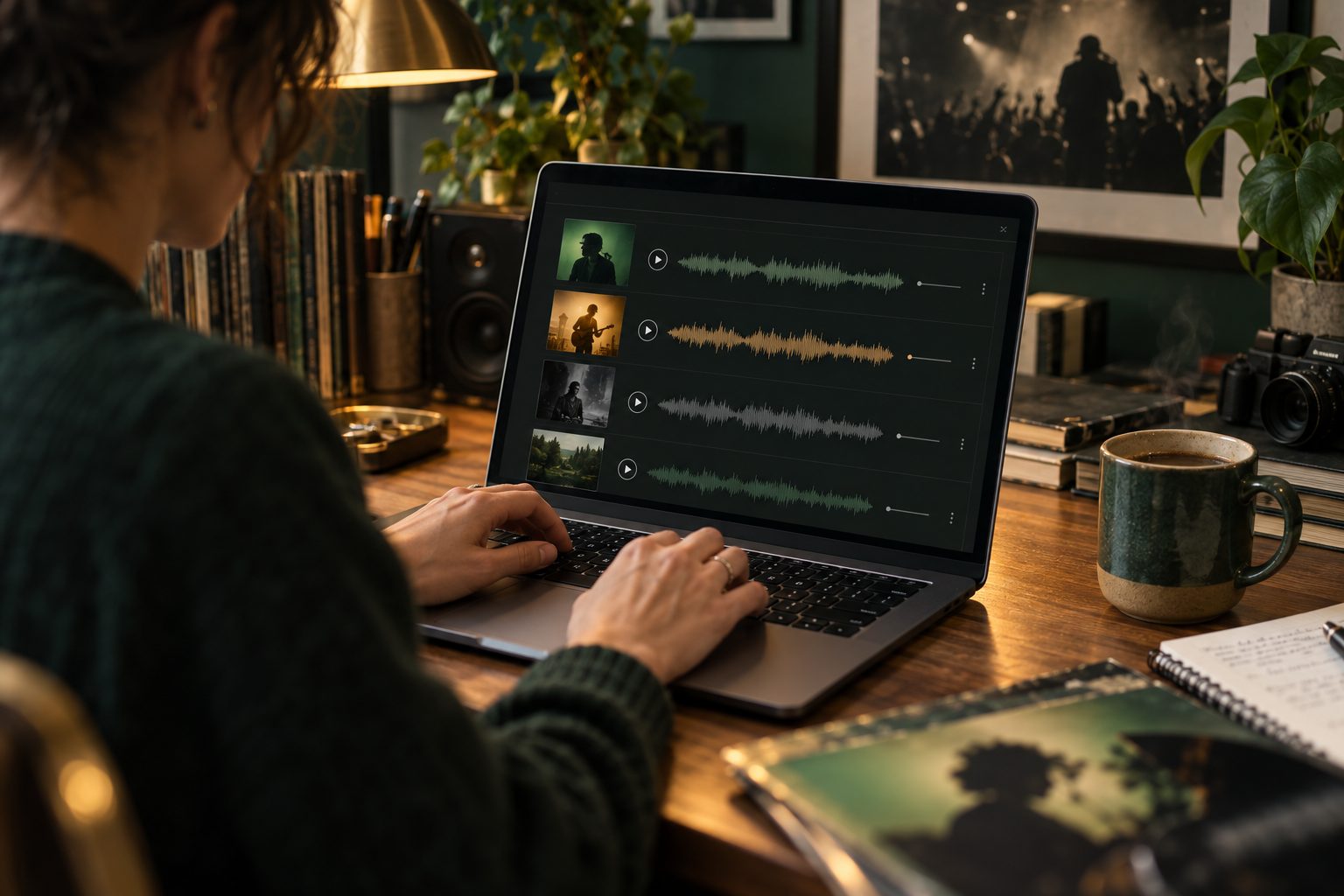
Publications do not listen to music; individual human beings do. Pitching an editorial inbox like info@musicblog.com usually lands your email in a crowded slush pile. To drastically improve your response rate, locate the specific staff writer or contributor who covers your genre.
Inspect the Byline
When you find an article covering an artist in your niche, look at the byline. Who wrote the piece? Search that writer's name across the publication to see if they regularly review your genre. A writer who consistently covers bedroom pop will be far more receptive to your track than a colleague at the same outlet who focuses on ambient electronic music.
Track Down Contact Information Respectfully
Many music journalists list their preferred pitching methods directly in their social media bios or personal portfolios. Look for professional guidelines such as "Submissions to [email address]" or "No DMs, email pitches only." If a writer explicitly states their inbox is closed to unsolicited pitches, respect their boundaries and look for another contact at the publication.
Keep your research organized in a spreadsheet. Record the writer's name, publication, email address, recent articles they wrote, social handles, and specific submission guidelines. Before reaching out, you can run your upcoming single through a free song analyzer to evaluate track metrics and ensure your metadata and presentation align with professional standards.
Anatomy of an Effective Music Blog Pitch
Music writers are perpetually pressed for time. A strong pitch answers who you are, what your music sounds like, why it matters right now, and where they can listen to it within ten seconds of opening the email. Keep your entire email under 200 words.
The Subject Line
Your subject line should be direct, descriptive, and professional. Avoid sensationalism, excessive punctuation, and all-caps declarations. Include the artist name, track title, release date, and a concise genre or sonic reference.
- Poor: "CHECK OUT THIS INCREDIBLE NEW HIT TRACK FROM INDIE STAR!"
- Effective: "Pitch: [Artist Name] - '[Song Title]' (Release Date: Oct 24) [Indie Folk / For fans of Phoebe Bridgers]"
The Body Copy
Open with a brief, genuine nod to the writer's recent work to show you did your homework. State your release clearly, summarize your sound in one or two sentences, highlight one compelling story hook or career milestone, and provide links to stream the music.
Sample Pitch Email Template
Here is an adaptable email structure designed for cold outreach:
Subject: Pitch: Elena Vance - "Ghost Towns" (Out Nov 15) [Atmospheric Indie Rock]
Hi [Writer Name],
I really enjoyed your recent piece on [Artist/Band Name]'s new EP, especially your observations on their live instrumentation. Given your focus on atmospheric indie rock, I thought you might appreciate the upcoming single from Elena Vance.
"Ghost Towns" (releasing November 15) combines minimalist fingerpicking with expansive analog synth textures, exploring themes of rural isolation. Written during a residency in northern Maine, the track was co-produced with [Notable Collaborator or Self-Produced detail].
You can listen to the private stream here: [Private SoundCloud or DISCO link]
The full electronic press kit, high-resolution photos, and release details are available here: [EPK Link].
Thank you for your time and consideration,
Elena Vance (or Publicist Name)
[Website / Social Links]
Essential Digital Assets to Include in Your Pitch
Never attach MP3 files, WAV files, or zipped folders directly to a cold pitch email. Large attachments can trigger spam filters, clog storage limits, and present security risks. Instead, provide clean, frictionless hyperlinks to private streaming services and cloud-hosted press materials.
1. Private Streaming Links
Use platforms designed for audio review, such as private SoundCloud links (with download enabled) or DISCO. Ensure the link does not require a password, login, or special account to play. If a writer has to create an account or request access, they will move on to the next submission.
2. A Clean Electronic Press Kit (EPK)
Your press kit should be hosted on a dedicated webpage or accessible cloud folder. You can assemble your materials using an EPK builder to present a unified, mobile-friendly package. Your press kit must contain:
- High-resolution promotional photos: Provide both portrait (vertical) and landscape (horizontal) options. Blog headers require landscape orientation, while social previews require square or vertical crops. Include photo credits.
- Artist biography: Offer both a short bio (50 to 100 words) for quick reference and a comprehensive bio (250 to 400 words) highlighting your musical background, inspirations, and notable achievements.
- Official single/album artwork: Minimum 3000x3000px JPG or PNG files.
- Track metadata and lyrics: List songwriters, producers, featured artists, and full lyric sheets.
- Accurate release dates and distributor details: State clearly whether the release is an exclusive premiere, an unreleased single under embargo, or an active release.

Step-by-Step Pitching Workflow: From List Building to Follow-Up
Executing an organized campaign prevents burnout and keeps your submissions professional. Follow this structured timeline for your next release.
Step 1: Finalize Assets Four to Six Weeks Prior to Release
Long-lead publications work weeks in advance. Have your final master, artwork, promotional photography, and press release completed at least a month before your public release date. If you plan to pitch for editorial playlisting through Spotify for Artists, keep in mind that Spotify recommends submitting at least seven days before release day, though two to three weeks provides optimal review time.
Step 2: Build a Targeted List of 30 to 50 Outlets
Spend time reviewing archives and finding active writers. Record specific article references for each journalist. Avoid purchasing bulk email lists; these lists are notorious for outdated addresses, retired writers, and high bounce rates that will damage your email domain reputation.
Step 3: Send Your Initial Pitches Three to Four Weeks Out
If you are seeking a premiere (where a single outlet exclusively hosts your track or music video 24 to 48 hours before general release), approach your top-choice publication first. Be upfront: "We are offering [Publication Name] the exclusive premiere for this track." Give them five to seven business days to respond before offering the premiere to another outlet.
Step 4: Send One Polite Follow-Up
If you do not receive a reply after one week, send a single, brief follow-up reply in the same email thread. Keep it courteous:
"Hi [Writer Name], I'm circling back quickly on my pitch for [Artist Name]'s upcoming single '[Track Title]' (releasing [Date]). The private streaming link is here: [Link]. No worries if it's not a fit for your schedule right now. Thanks for your time!"
If you receive no response after the follow-up, move on. Never harass an editor across multiple platforms or complain on social media about being passed over.
Step 5: Share and Tag Features on Release Day
When an outlet covers your release, share their article across your social media channels and tag both the publication and the specific writer. Editorial coverage thrives on reciprocation; driving traffic back to their site demonstrates that you are a supportive partner, making them much more likely to cover your future releases.
How to Spot and Avoid Pay-for-Review Traps
The rise of digital content mills has spawned an aggressive industry of pay-for-review schemes. As an independent artist, protecting your budget and your artistic integrity requires knowing how these operations work.
The "Guaranteed Coverage" Red Flag
Legitimate journalism is editorially independent. If a blog, curator, or PR company promises guaranteed placement in exchange for a direct fee (e.g., "Pay $50 for a guaranteed front-page review"), they are running a paid advertisement service, not an authentic editorial outlet. Paid links without clear advertising disclosures violate Google's Webmaster Guidelines, which penalize sites that buy or sell links to pass search ranking authority.
Spotting Low-Quality Content Mills
Be cautious of blogs that exhibit these traits:
- Indiscriminate publishing: They publish thirty reviews a day spanning death metal, country, trap, and ambient folk without distinct curation.
- Zero audience engagement: Their social media accounts show tens of thousands of followers, but their posts receive zero comments, or exclusively bot comments.
- Unsolicited Instagram/Email DMs: They message you shortly after you release music saying, "Great track! Submit to our blog for a small processing fee."
- Formulaic, AI-generated reviews: Their write-ups reuse the exact same buzzwords, altering only the track name and artist name.
Legitimate Paid Feedback vs. Payola
There is a distinction between paying a micro-fee on platforms like SubmitHub or Groover to ensure an editor listens to your track and provides written feedback versus paying for guaranteed coverage. On transparent feedback platforms, curators are paid for their time reviewing the submission, but they retain full editorial discretion to decline coverage. Be wary of any platform that guarantees an article in exchange for cash.
Turning One Feature Into Long-Term Industry Relationships
Publicity is cumulative. Landing one review on an independent blog gives you a foundation for subsequent campaigns. The key is treating journalists as long-term creative peers rather than transactional service providers.
Maintain an organized archive of your press quotes. When you prepare your next release, mention past coverage to writers who supported you previously: "Thanks again for featuring my previous single 'Ghost Towns' back in November. I have a new follow-up single coming out next month that builds on that sound, and I wanted to share it with you first."
Writers appreciate continuity. Following an artist's artistic development over several releases is one of the most rewarding aspects of music journalism. If a writer moves from a small independent blog to a major music publication, your established relationship moves with them. To learn more about synchronizing your press coverage with organic release strategies, check out our insights on the PlaylistProfit blog.
Common Pitching Mistakes Independent Artists Make
Even seasoned musicians fall into preventable habits that undermine their public relations efforts. Avoid these widespread errors:
- Mass BCC-ing editors: Sending a generic press release to fifty journalists on BCC is an immediate sign of amateur outreach. Most automated spam filters send these directly to junk folders.
- Missing track links: Forgetting to include the private streaming link or linking to an expired file transfer service like WeTransfer that requires a large download before listening.
- Pitching after the release: Reaching out weeks after your track is already live on streaming services. Most music blogs prioritize unreleased singles or music that dropped within the current week.
- Sending unformatted walls of text: Providing a 2,000-word life story before mentioning what the song sounds like. Keep your bio brief and link out to deeper background reading.
- Failing to specify genre tags or sound-alikes: Leaving the writer to guess what sonic category you fall into. Accurate "for fans of" descriptors help journalists quickly determine whether your release fits their beat.
Final Thoughts: Consistency Over Shortcuts
Earning coverage on respected music blogs takes patience, research, and meticulous organization. There are no reliable shortcuts; purchasing guaranteed placements dilutes your brand and wastes financial resources that could be directed toward high-impact marketing, tour support, or professional content creation.
Treat music journalists with respect, honor their submission guidelines, ensure your press assets are polished, and target publications that genuinely champion your subgenre. Over time, consistent outreach transforms cold pitches into valuable industry relationships that support your musical career for years to come.
More music promotion guides · Free Song Analyzer · Playlist campaigns